Guides · 6 min read
How to clean marble countertops without etching them.
Marble is calcium carbonate. Anything acidic, from lemon juice and wine to most bathroom sprays, dissolves a microscopic layer of the surface on contact and leaves a dull spot called an etch. That one fact explains almost every rule below. Follow them and a marble counter in a Georgetown kitchen will look the same in ten years as it does today.
Updated October 25, 2026 · By Top Shelf Cleaners, Washington, DC
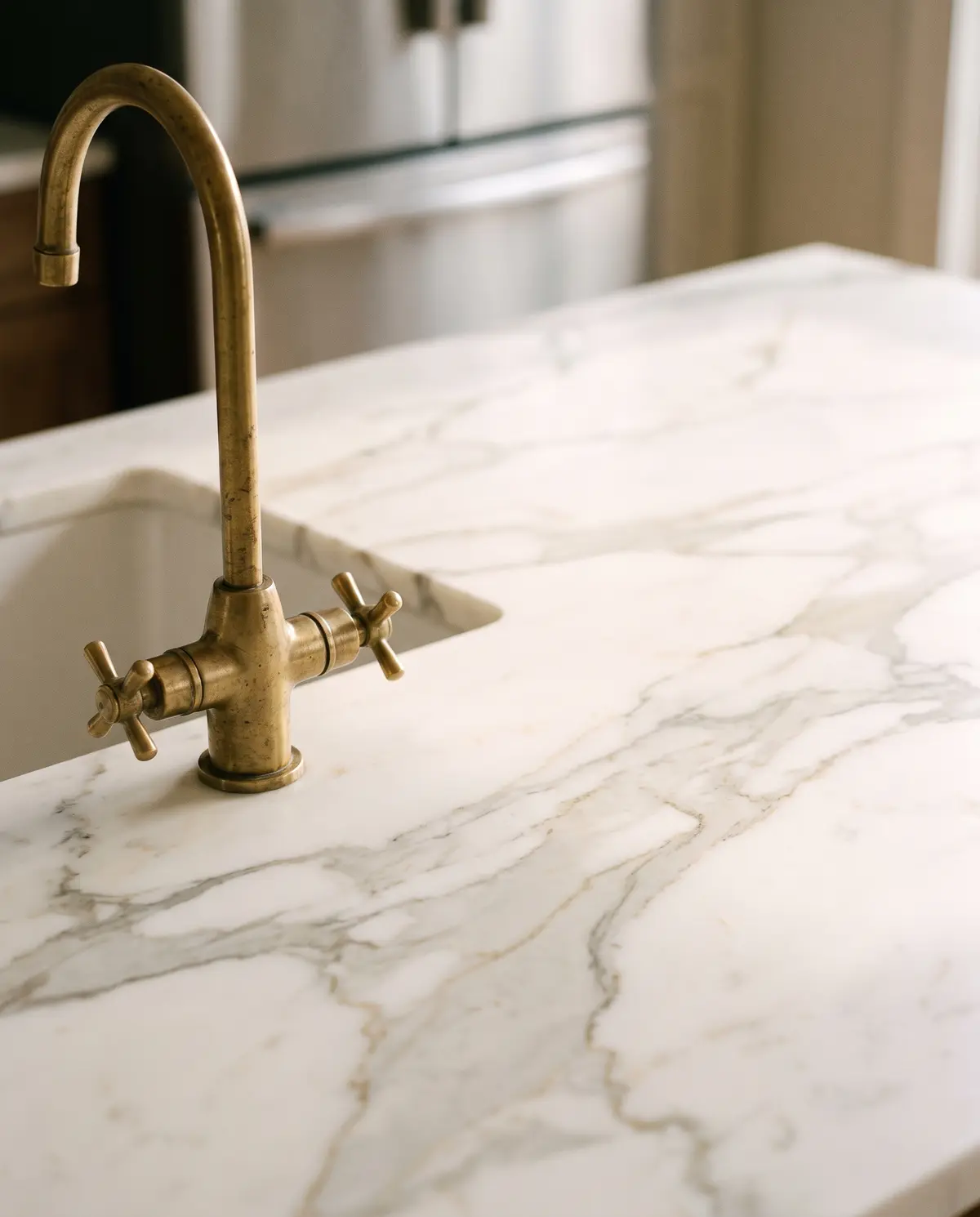
Daily cleaning
Wipe with a soft cloth and warm water, or a pH-neutral stone cleaner diluted as the label says. Dry with a second cloth. Water left to evaporate on honed marble leaves mineral spots, and on polished marble it leaves rings, so the drying step is not optional.
Wipe spills when they happen. Coffee, wine, citrus, tomato, vinegar and oil all mark marble if they sit. Blot rather than wipe so the liquid is lifted instead of spread.
What never touches marble
The list is short and absolute.
- Vinegar, lemon, or any cleaner that says "cuts through soap scum" or "removes hard water". Those are acids.
- Bleach and ammonia, including most glass cleaners and bathroom sprays.
- Abrasive pads, powders and "magic" erasers, which are fine sandpaper.
- Steam cleaners on polished marble: the heat and moisture can cloud the finish and loosen seams.
Etches versus stains
An etch is damage to the stone itself: a dull, slightly rough spot where the polish has been dissolved. It cannot be cleaned off because nothing is on the surface; the surface is gone. Light etches on polished marble can be buffed out with a marble polishing powder worked in small circles with a damp cloth. Deep etches need a stone professional with a diamond pad.
A stain is something in the stone: oil, wine, rust, ink. Stains are treated with a poultice, a paste that draws the stain up out of the pores. Baking soda and water for organic stains; baking soda and hydrogen peroxide for wine and coffee; a commercial rust remover for marble, never a generic one, for rust. Apply a quarter-inch layer, cover with plastic wrap, tape the edges, leave it 24 hours, lift it off and let the spot dry. Repeat if the stain lightened but did not clear.
Sealing
A sealer slows absorption; it does not prevent etching, because etching is a reaction with the stone, not with what is on top of it. Test the seal by leaving a few drops of water on the counter for ten minutes. If the stone darkens under the drops, it is time to reseal. Most kitchen marble needs an impregnating sealer every six to twelve months; bathroom vanities less often.
Clean and dry the counter completely, apply the sealer with a soft cloth, let it dwell as the label says, and wipe off every trace of excess before it dries. Sealer left on the surface is the usual cause of a streaky or hazy counter.
Honed versus polished
Honed marble has a matte finish and hides etches better, which is why it is the usual choice for kitchens in DC renovations. It is more porous, so it stains more easily and needs sealing more often. Polished marble resists stains better and shows every etch. The cleaning method is the same for both; the sealing schedule is not.
Cutting boards, trivets and coasters
The best marble care is keeping things off it. A cutting board for anything acidic, a trivet under anything hot, a tray under oils and bottles by the stove, and coasters under glasses. A marble island in a Kalorama kitchen that has been used this way for twenty years has no story to tell, which is the point.
Marble, limestone, soapstone and travertine are cleaned by method at every visit, with the sealer schedule kept in your residence profile.
See Residence CareQuestions
- Can I use dish soap on marble?
- A small amount of mild, pH-neutral dish soap in warm water is fine for occasional use. Rinse and dry afterward; soap left to build up dulls the surface over time. A dedicated stone cleaner is better for daily use.
- How do I get water spots off marble?
- Buff with a dry microfiber cloth first. If the spot stays, it is a mineral deposit or a light etch: for deposits, a damp cloth and a drop of neutral cleaner, then dry; for a light etch on polished marble, a marble polishing powder.
- Is Calacatta or Carrara easier to care for?
- They are both marble and behave the same way. Carrara is greyer and hides etching slightly better on a honed finish; Calacatta is whiter with bolder veining and shows marks more. Care is identical.
- What does a cleaning service use on marble?
- A pH-neutral stone cleaner, soft cloths and a dry buff. At Top Shelf Cleaners nothing acidic or abrasive is on the cart when the surface is stone, and the residence profile records the sealer schedule.
Related: How to clean hardwood floors without damaging the finish · How to care for unlacquered brass · Deep cleaning in Washington, DC