Guides · 5 min read
How to clean and care for unlacquered brass.
Unlacquered brass is sold as a "living finish": raw brass with no clear coat, left to darken and mottle with handling and air. The patina is the point. Most of the care, then, is knowing what not to do, because the usual instinct, to make metal shine, undoes months of the finish the owner paid for.
Updated October 25, 2026 · By Top Shelf Cleaners, Washington, DC
Routine cleaning
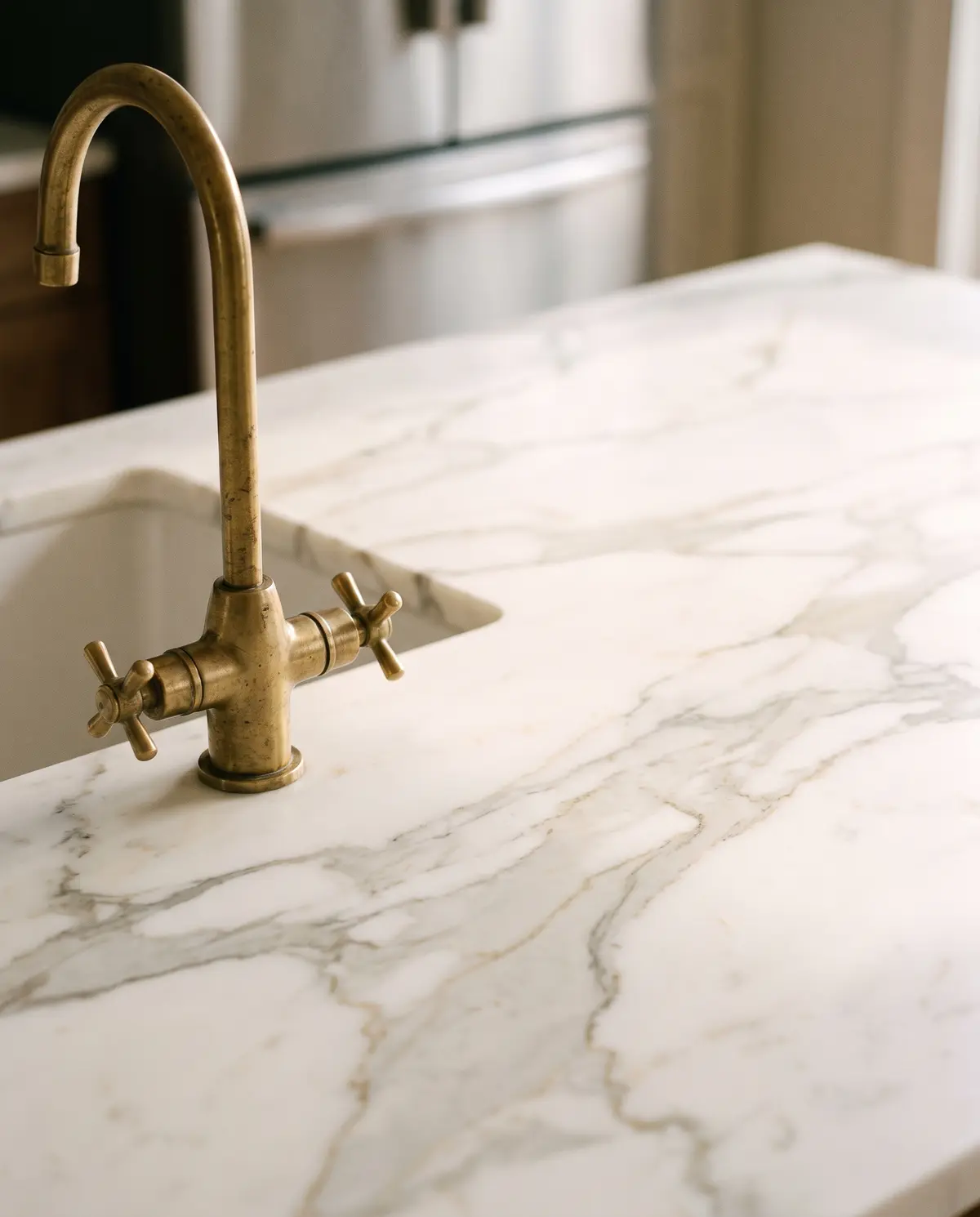
Wipe with a soft dry cloth. For fingerprints, water spots or soap, use a cloth dampened with warm water and a drop of mild, pH-neutral soap, then dry immediately. That is the whole routine. Brass darkens fastest where it is touched, so a faucet handle will go deeper brown than the spout; that unevenness is normal and expected.
Dry the base of faucets and the area around handles after cleaning. Water that sits where brass meets stone or porcelain leaves a green-white ring of verdigris and mineral deposits that is harder to remove than anything else on this page.
What to keep away from it
- Brass polish, unless you have decided you want it bright. Polish strips the patina back to raw yellow and the process starts over.
- Acidic cleaners: vinegar, lemon, bathroom descalers. They etch the brass and leave pink blotches where the copper in the alloy is exposed.
- Bleach and ammonia-based glass cleaners, which discolour and can pit the surface.
- Abrasive pads and powders, which leave permanent scratches that catch light.
- Hand soap left on the faucet. Many liquid soaps are mildly acidic and leave spots where they dry; rinse the spout after washing hands.
If you want it bright again
You can reverse the patina at any time. Use a non-abrasive brass polish on a soft cloth, work in small areas, wipe off the residue completely and buff dry. Expect it to darken again within weeks in a kitchen and months on a cabinet pull. Some owners polish once a year and let it live in between; many never polish at all.
For a quick, gentle brightening without commercial polish, a paste of flour, salt and white vinegar works on raw brass, but it is an acid and should be rinsed and dried promptly, and it is not for brass near marble, where a drip will etch the stone.
Verdigris and water rings
The green crust that forms at the base of a faucet is copper carbonate from standing water. Soften it with a cloth soaked in warm water laid over the spot for ten minutes, then lift it with a wooden or plastic pick, never metal, and dry thoroughly. Preventing it is a matter of drying the base after use, which is why we do it on every visit.
Brass and the materials around it
Unlacquered brass in DC kitchens and baths usually sits on marble, soapstone or zinc. Any product used on the brass ends up on the surface beneath it, so the rule is to clean the brass with what the stone can take: neutral soap and water, nothing else. Polish, if used, goes on the cloth, not the fixture, and the counter is covered first.
Brass, stone, wood and glass are cleaned by method at every visit, with your preferences written down once and kept.
See Residence CareQuestions
- Should I polish unlacquered brass?
- Only if you want it bright. The darkening is the intended finish. Many owners never polish; some polish once a year. Either is correct.
- Why does my brass faucet have pink or red spots?
- An acid, usually a bathroom cleaner or hand soap, has stripped the zinc from the surface of the alloy and exposed the copper. Stop the acid and the spots will blend into the patina over a few months. A light polish removes them faster.
- How do I clean brass cabinet pulls and lighting?
- The same way: soft dry cloth, damp cloth with neutral soap for marks, dry afterward. Lighting that is out of reach only needs dusting; its patina develops more evenly because it is not handled.
- Does a cleaning service polish brass?
- Only when instructed. At Top Shelf Cleaners the default for unlacquered brass is wipe and dry, and the residence profile records whether you want fixtures left to patina or polished on a schedule.
Related: How to clean marble countertops · How to clean hardwood floors · Kalorama